Member Spotlight:
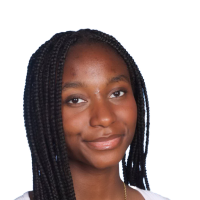
Alyssa Bell
Are there topics or themes that you feel most drawn to explore in your work?
Poetry has always been my outlet for creating and being creative; it is my way to express my inner dialogue and process life as it presents itself to me. I often find myself writing about my identity as a young Black woman and how it shapes my experiences. I’ve also written about my mental health struggles, love for music, and finding comfort in the mundane things–the world is my theme, and poetry is my memoir.
Where do you find inspiration to create poetry?
Where don’t I find inspiration to create poetry? Although many of my poems draw from personal experience, inspiration is everywhere for me. One of my older published poems, titled Snapdragon, talks about my experience as a woman in this world, and the dangers that consequently follow, but I wrote it in terms of flowers and what different flowers mean. I love to blend nature and its double meanings into my work, causing my readers to take a step back and truly read for what I’m saying– my hidden message.
How do you make time to write or pursue other artistic endeavors?
As much as I love writing poetry, my first love has always been dance, and in between late school nights and early weekends, I dedicate at least 3 hours to dance. Finding time to write has always been easier for me– as I write about everything, I have essays about the dances I curate, poems about music, and journals filled with simple expressions that were found in the moment. I am almost always writing, whether it means I’m pouring out my heart on the notes app, filling up a journal, or editing an essay– the true question is when do I make time to stop writing?
How has your experience as a writer shaped your understanding of art as a way to express yourself, connect with others, and build community?
My goal has always been to connect with people through my writing, and I have always believed that if at least one person has felt seen with my poems, then I have done my job. My school holds multiple painting and clay art galleries every year, and while I don’t share the same kind of skill, I can further appreciate the thought and story behind each art piece, and poetry is what gave me the tools to tap into that understanding of different art forms.
What is the best advice you’ve received about writing poetry?
“Let the emotions come first; words come soon after.”
– Mr. Allen, Tenth Grade English teacher
Do you enjoy reading for an audience or performing your work publicly?
As much as I love writing and having my poetry read, I do not enjoy reading for an audience or performing my work publicly. I have always wanted to share my poems, but I love to share them differently–in small settings like the classroom or a family gathering. When the crowd starts to become so large that I can’t hear my thoughts, that’s when I know to stop–before anything, my poetry is meant to be a comfort for me, and not my stressor.
Who are some of the artists—poets, or others—who inspire you?
Untraditional and groundbreaking, I couldn’t mention my journey with writing poetry without Kendrick Lamar and Amanda Gorman. I still remember being in my sixth-grade history class and watching her perform “The Hill We Climb,” for the very first time. It was one of the most eye-opening moments in my life. She showed me that I could make a difference with my writings, that my poetry has a place in the world outside my personal journal, and because of her, in my freshman year of high school, I pushed my first poem out into the publishing world. Why, Kendrick Lamar? But why not? To me, he is the epitome of the poet who is able to reach out to my generation and speak to my peers. He raps a poem of his life, his fight, and his wins, and whenever I need motivation, Kendrick Lamar will forever be the poet I turn to.
What creative projects are you currently involved in?
I am currently studying different forms of poetry and removing the Western lens I have on what my poems should present as. I have studied Mandarin Chinese (汉语) for going on five years and aim to also expand my poetry to cross language barriers. I am currently studying a Qu (曲), which is a classical form of Chinese poetry often found in song. I hope to one day curate my own Qu and ideally study other forms of classical (and modern) Chinese poetry.
What advice would you offer someone new to poetry or hesitant about writing?
There are no rules to poetry, so just dive in– get vulnerable, get messy, get funny, get philosophical; poetry is for anyone and everyone, and don’t let anybody tell you otherwise.