2026 Helen Schaible International Sonnet Contest
2026 Poetry Contest
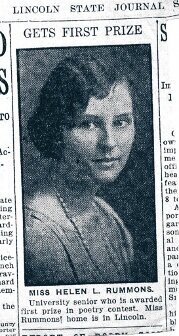
Helen Schaible was a poet, mother, teacher, classicist. The Helen Schaible International Sonnet Contest was established in her memory in 1998 by the Poets Club of Chicago and funded by a gift from Helen’s daughters Jane Edwards, Lucy Parker, and Katherine Martin, and her son, the late David Schaible.
Categories & Rules
Rules & Submission Period
Submission Period: June 1 – July 15, 2026. Free and open to all.
Categories:
Traditional Sonnet. Shakespearean or Petrarchan
Modern Sonnet. Sonnets that violate one or more of the rules of traditional sonnets but still contain what the Poetry Foundation website refers to as a “ghost” of the sonnet form. Modern sonnets may or may not be rhymed, and they may experiment with various meters or not use a regular meter at all. Usually they are 14 lines, but this may also vary slightly.
Rules:
Poets can enter ONLY ONE sonnet per category. This means only 1 or 2 poems total per poet.
Entries must be original and unpublished. Submitted sonnets cannot be published in a book/journal, posted online or on social media, or under consideration for publication elsewhere. Also, poems cannot be created with the help of any artificial intelligence applications.
One award per poet. Poets can only win or be noted in one of the two sonnet categories.
How to Enter the Contest:
Submit contest entries electronically using the submission form. The Online Sonnet Contest Form link will be posted here on June 1st. The form requires that each sonnet submitted is attached as either a Word or PDF file. You cannot paste the sonnets into the form. They must be attached as documents.
All entries must be received by midnight CDT, July 15, 2026. No late entries will be accepted. Have questions? Email poetsandpatrons@gmail.com.
Judging
All judging is done anonymously, with no input from anyone associated with Chicagoland Poets & Patrons. All judges’ decisions are final.
2026 Traditional Sonnet Judge: Marilyn L. Taylor
Marilyn L. Taylor, former Poet Laureate of Wisconsin and of the city of Milwaukee, is the author of three full-length collections of poetry, most recently Outside the Frame: New and Selected Poems (Kelsay Books, 2021), plus five poetry chapbooks. Her essays and poems have appeared in many anthologies and journals, including Poetry, Able Muse, Measure, Light, Rhino, Aesthetica, Think, Mezzo Cammin, and the Potcake Chapbook poetry series. Taylor has been awarded First Place in several national, international, and regional poetry competitions. She currently serves as an Associate Editor for Third Wednesday and Verse-Virtual poetry journals. Please visit her website at www.mltpoet.com.
2026 Modern Sonnet Judge: Carol Clark Williams
Carol Clark Williams was third poet laureate of York, Pennsylvania, one of the founders of York Poets, and originator of the “Poetry Spoken Here” tent readings for the Yorkfest open air festival. Her work has won state, local, and national awards and is widely published online and in print. She is a Pushcart nominee and a rostered artist for Pennsylvania’s Arts in Education Program. Williams won the 2022 NFSPF Barbara Stevens Manuscript award for her book, Unpacking for the Journey. Beyond writing, her favorite occupations are teaching poetry workshops for Penn State Osher Lifelong Leaning Institute and hosting the Second Sunday Renascence Poetry Readings in conjunction with Creative York.Awards and Sonnet Contest Reading
2026 Modern
Prizes for both sonnet categories:
First prize: $50
Second prize: $30
Third prize: $20
Three Honorable Mentions
Winners will be notified via email by early October. If poets do not receive an email by then, they can assume they did not win.
A list of all winners’ names and poem titles will be posted on our website, www.poetsandpatrons.net. All winning poets will be invited to participate in an online reading in October.
Some Thoughts on Defining a Modern Sonnet:
Rules about subject matter are looser than in more traditional sonnets, although modern sonnets should offer some sort of final point or insight in the closing lines. If you have questions, the following resources may help:
Rachel Richardson’s article, “Learning the Sonnet” on the Poetry Foundation’s website: https://www.poetryfoundation.org/articles/70051/learning-the-sonnet
Litcharts article on sonnets: https://www.litcharts.com/literary-devices-and-terms/sonnet
Annie Finch’s article, “Chaos in Fourteen Lines:” https://www.cprw.com/Misc/finch2.htm
Stephanie Burt’s article in Slate: https://slate.com/culture/2019/05/terrance-hayes-sonnet-poetry-stephanie-burt.html?fbclid=IwAR2qSqnUxsnPtIDK16skYfcEUJR9APz1fZKITwxz
Bnka9dlBGQXp8uDlrTM